
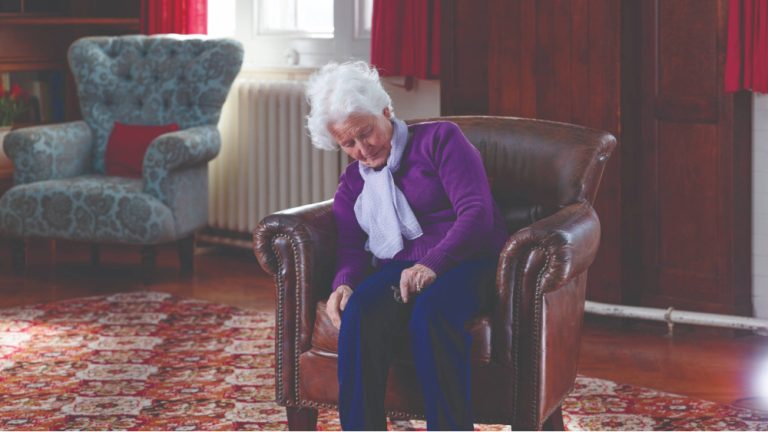
We help you understand why forward falls happen and show how the right Care Chair can make sitting safer and easier.
Why forward falls happen
Forward falls often begin with a slow slide or a lean you cannot quite correct. When your core is tired or weak, staying upright takes constant effort. Conditions such as Parkinson’s disease, Huntington’s disease, or life after a stroke make control more challenging due to muscle weakness and neurological changes. The risk increases if the chair does not fit you or is set up poorly, your feet lack firm support, or the floor is slippery. A fall can cause an injury and reduce your confidence, which makes sitting even harder.
How a Care Chair helps
A Care Chair is not just about comfort; it supports your posture and helps you stay upright, which reduces the chance of a forward fall.
- Tilt-in-space: When safe and appropriate, the whole chair gently tilts back while keeping your posture aligned. This reduces the urge to lean forward and helps you sit upright, vital for you to breathe clearly and communicate with loved ones. You can choose from both manual and motorised chairs; motorised chairs allow you to control the tilt motion.
- Tailored back support: Appropriate trunk support, at the right level for your body shape, can prompt an upright sitting position and protect the head and spine for safe eating and drinking, while limiting leaning in the chair.
- Contoured seat cushion: Shaping around the pelvis helps stop you sliding towards the front of the seat while keeping your thighs in alignment, important for protecting your skin health.
- Adjustable foot support: Appropriate foot support set at the correct height and angle gives your feet firm contact, improving alignment and balance.
- Optional supports: Belts or harnesses can add security when clinically appropriate. They are fitted to you for comfort, safety, and freedom of movement.
Used together, these features can reduce the risk of serious falls and support comfort and engagement in sitting.
Who this helps
You are likely to benefit if you lean, slide, or fall forward in a standard armchair, live with a neurological condition or dementia, feel exhausted trying to sit upright, or are recovering after a stroke. The right Care Chair can help at home, in a care home, or in hospital, but it must be tailored to you.
Why a seating assessment is essential
Standard chairs look comfortable, but they are not built for postural needs. A seating assessment is a practical visit that matches the chair to your body, routine, and home from day one.
We talk about what you want to do more easily, look at how you sit, and then adjust a chair for you to try. You can take your time. There is no pressure to decide on the day, and you can have a family member, therapist, or carer with you.
Getting this right improves safety, reduces the need for constant repositioning, and helps you sit for longer with less effort. Seating affects breathing, eating, skin, and energy, so, it should be set up by a trained specialist, not left to chance.
If your needs change, we can readjust the same chair. We stay involved and review sizing and settings, so your chair keeps working for you.
What to expect at your assessment
- Conversation: A trained, personable specialist assessor will discuss your daily routine, goals, and worries.
- Simple checks: We examine your posture and movement. We do not do invasive tests.
- Demonstrate and try the Care Chair: We will adjust tilt, size (width and depth), cushions, and foot support so you can try the chair during the assessment.
- Plan and quote: After the assessment, we will send you a quote and provide clear options, including any accessories you may need.
- Set up: Once the chair is manufactured, we will deliver the Care Chair, set it up to your needs and requirements, and provide complete training for you and others.
Summary
Forward falls are common when posture is hard to control, muscles are tired, or the chair is not right for you. The right Care Chair reduces the risk by supporting your body in a safe, stable position. With a proper assessment and set-up, you can sit for meals, read, talk, and participate in activities that are important to you, comfortably and confidently.
Next steps
Book a no-obligation home assessment. Try a chair at home before you decide if a Care Chair is right for you. We deliver, set it up, and show you how to use it.