
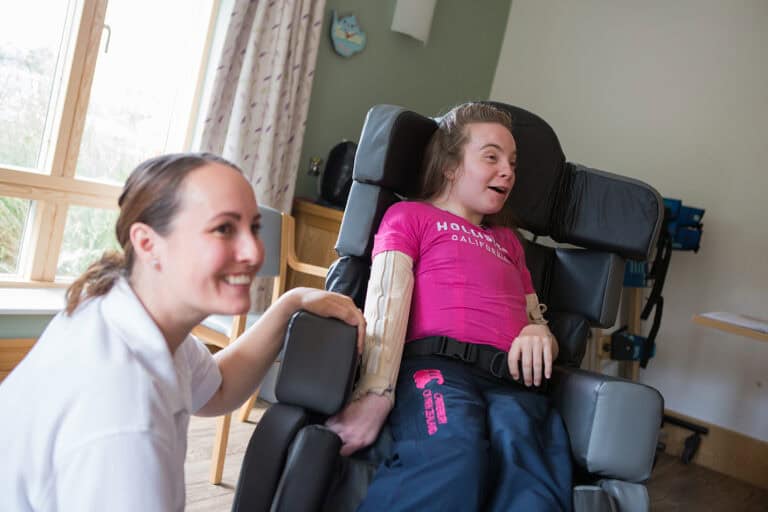
Whether you are a partner, relative, friend, or paid or voluntary carer, if you support someone who struggles to sit well or stay upright in their chair, you will need clear, practical guidance to ensure positioning at home is safe, consistent, and easier for everyone.
In this article, you will learn:
- Why your role matters in everyday postural care.
- A simple routine that works in real homes.
- How CareFlex trains, supports, and reviews with you.
Why your role matters
Therapists assess and recommend based on postural care needs, but you provide the essential everyday support. This collaboration is key. Good positioning protects comfort, skin, breathing, swallowing, and energy conservation. When the chair is not correctly set up, people slide or lean, feel sore, struggle to breathe, become isolated, and can lose their confidence. It can also greatly affect their health and wellbeing. Small, steady habits from you prevent this and make daily life much easier for the person you support.
A simple routine you can trust
Say it aloud the first few times: Pelvis. Feet. Trunk. Comfort. Activity.
Pelvis: Help the person sit right back in the seat. Check that there is a two-finger gap between the front of the cushion and the back of the knees; if not, adjust the seat depth.
Feet: Set foot support so both feet rest flat; if foot positioning is difficult, consider adjusting the footplate angle or using a padded cushion.
Trunk: Centre the body. Add a gentle tilt if advised, so staying upright takes less effort. Fit side supports or a headrest if they are part of the care plan.
Comfort: Ask how it feels. Look for fidgeting, sliding, leaning, or changes in behaviour. Make a small change and ask again.
Activity: Think about the things they enjoy doing and pay attention to their environment. Bring the table, drink, phone, or remote within reach.
Once you know the steps, this takes minutes.
Keep everyone consistent
Keep it simple: take two quick photos, one showing the person’s best sitting position and one showing the chair settings. Leave a clear, concise note with the photos by the chair, where possible, with the seat depth setting, footplate position, and which supports to use. Then everyone who helps can set it up the same way.
A quick daily check
When you visit the person, or before you leave the room, do a quick check.
- Is their pelvis right at the back of the chair?
- Are both feet flat and supported?
- Is their trunk centred?
- Ask them if they are comfortable.
- Think about their environment and daily activities.
Small tweaks now will prevent bigger problems later.
Training and aftercare
When CareFlex assesses and sets up a Care Chair or Riser Recliner, we teach the person, and their carers, the routine in their own home or care environment. This gives you the chance to practise using the chair, and we can check it with you. We can leave simple guidance with photos and the right settings so everyone can follow the same steps.
After that, you can contact the CareFlex Assessor at any time. We can discuss a quick tweak or arrange a review if things have changed. The chair is adjustable, so small changes often make a big difference.
Further support
If you are concerned that the person’s current chair cannot support them well, or if a more detailed care plan developed with a therapist is needed, then reach out to us for guidance.
Contact us if you notice new sliding or leaning, skin that stays red, more coughing or breathlessness when sitting, a change in weight, or new pain. No question is too small. The aim is the same as yours and the person you support: to keep sitting safe, comfortable, and enabling meaningful daily life.