
Most of us don’t think much about the chair we sit in every day. If it’s comfortable enough and looks nice in the living room, we assume it’s doing its job.
But for people living with reduced mobility, frailty, neurological conditions, or changing health needs, a chair can have a much bigger impact than many realise.
As we get older, or as health needs change, sitting can become more difficult than it once was. Often, the signs appear gradually. A person may start sliding forward in their chair, leaning to one side, becoming uncomfortable after shorter periods of sitting, or needing regular help to reposition themselves.
These changes are often attributed to ageing, illness, or a health condition, but sometimes the issue is that the seating is no longer providing the support the individual needs.
The Chair Is Never Just a Chair
A chair can influence far more than comfort. The right seating can support:
- Better posture and positioning
- Feeling secure and stable while sitting
- Participation in family life and daily activities
- Easier transfers and movement
- Independence and confidence
When seating is no longer meeting a person’s needs, it can affect how long they choose to sit, how comfortable they feel, and how involved they are in everyday life.
Five Signs It May Be Time to Consider More Supportive Seating
- Frequent slumping, leaning, or sliding forward in the chair
- Increased discomfort or fatigue
- Difficulty standing up safely
- Spending less time engaged in daily activities
- Increased reliance on family or carers for repositioning
These are often early signs that additional support may be beneficial. The important thing is not to wait for a fall, injury, or crisis before reviewing seating needs.
Looking Beyond Comfort
When choosing seating, it is important to consider more than whether a chair feels comfortable for a few minutes. The best seating solution should support the person throughout their day, helping them stay comfortable, safe, and engaged in the things that matter most to them. This includes considering:
- Individual comfort and support needs
- Personal preferences and lifestyle
- Daily routines and activities
- The home environment
- Caregiver support
The best chair is often the one that balances individual needs and clinical support with practical everyday use.
Introducing the CareFlex EasiTilt
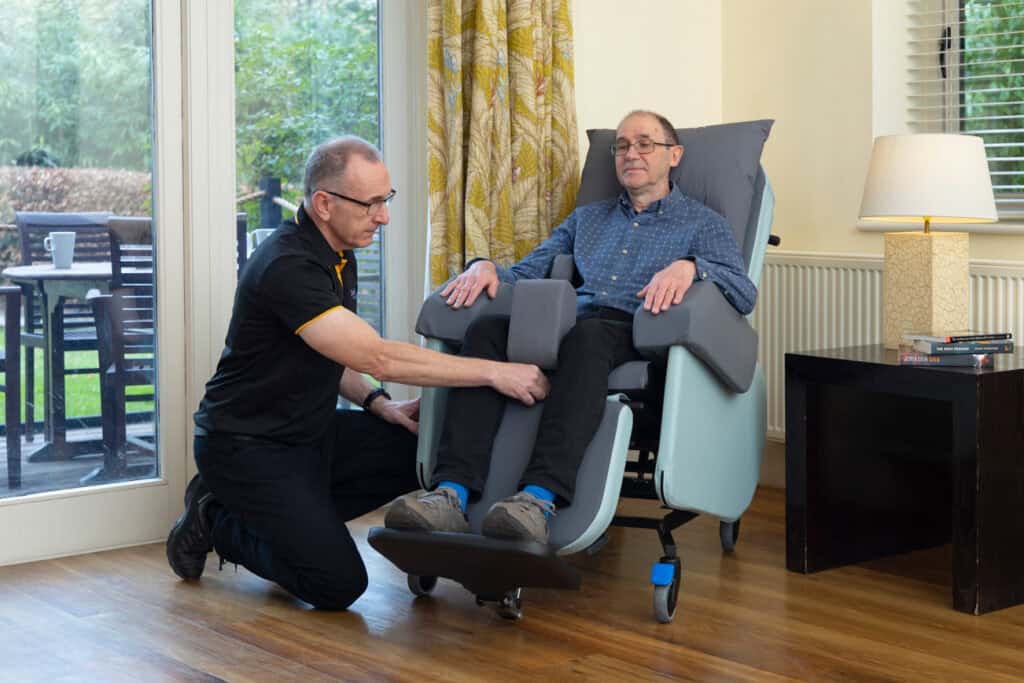
The EasiTilt is a supportive care chair designed for people who are finding it harder to sit safely and comfortably in a standard armchair or rise-and-recline chair.
Developed around the real challenges people experience at home, the chair is designed to promote comfort, stability, and confidence throughout the day. The whole chair can gently tilt backwards, helping the person feel secure and reducing the need for frequent repositioning.
The chair can also be tailored to individual needs, with a range of backrest options, seat settings, leg support, and accessories. This flexibility helps accommodate changing needs while supporting both the individual and those involved in their care.
Supporting Life Beyond Sitting
When seating is right, people often experience benefits that go beyond physical comfort. They can feel more settled, more involved in daily routines and more able to enjoy the moments that matter to them.
The EasiTilt is more than a chair. It is a supportive seating solution designed to help people remain comfortable, maintain dignity, and stay involved in the everyday activities that matter most when standard seating is no longer enough.