
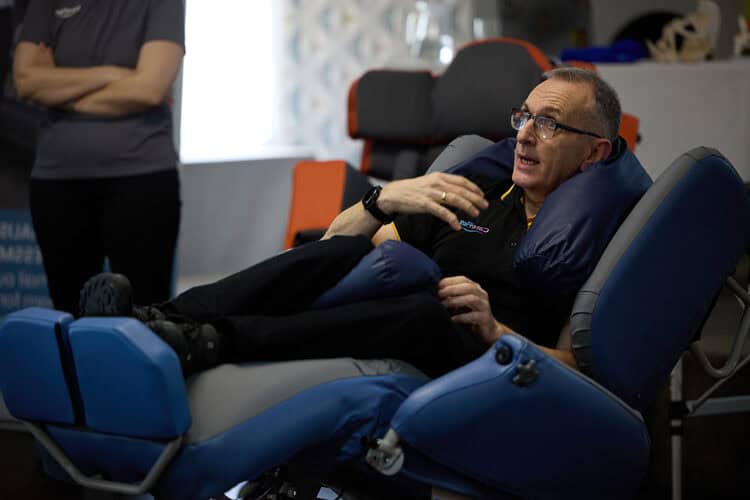
We demonstrate what comfort really means in a Care Chair, why it gets harder over time, and how the right set-up improves daily life.
What you will learn:
- Why comfort matters for health and well-being.
- How discomfort affects energy, mood, and function.
- Which Care Chair features make a practical difference.
Why comfort matters
“I just want to be comfortable.” We hear this a lot. Comfort is personal. For you, it might mean feeling safe and steady; for someone living with pain, it might mean finally relaxing; and for others, it might mean having a little more freedom.
As we age, muscles tire, and gravity makes upright sitting harder. You expend more effort, fatigue builds, and you do less of what you enjoy. If you cannot change position yourself, comfort becomes even more critical. Long periods in one fixed posture raise the risk of pressure injuries and fixed postural changes. People with abnormal muscle tone or uncontrollable movements can also feel spasms and reflexes that make sitting uncomfortable. A more sedentary lifestyle, including higher body weight, increases time spent seated, leading to stiffness and chronic pain.
If a chair is not comfortable, you will not use it. Comfort drives consistent use, which leads to better outcomes.
How discomfort affects daily life
Comfort touches everything you do in a chair. Poor support wastes energy and increases pain, reducing time at the table, shortening conversations, and making hobbies less appealing.
Physiology matters too; trunk and head position influence how well you breathe, swallow, digest, and circulate blood. If you slump, your chest and abdomen compress; breathing feels shallow, meals feel effortful, and digestion slows. Problems that can follow, like infections or constipation, add to discomfort and can limit confidence to sit out.
The aim is simple: Support posture so your body works more efficiently; you will feel better and be able to do more.
How a Care Chair improves comfort
A Care Chair is adjusted to your needs and how it is used daily. The features below work together to reduce effort and ease pressure without asking you to “hold” a position.
- Back-angle recline: Opens the hip angle when you want a more relaxed position; useful for reading or winding down in the evening.
- Tilt-in-space: Allows you to rest and redistribute pressure without sliding. It is helpful for short “tilt breaks” throughout the day to refresh soft tissues and save energy.
- Supportive back options: A waterfall back or contoured cushions can help you feel held and steady. Many people describe this as feeling more secure and less fidgety.
- Pressure-care surfaces: Cushions and breathable covers spread load and manage heat and moisture, so you are not shifting to escape hot spots.
What this looks like in real life
- Meals: With the back set a little more open and feet supported, you sit upright without leaning on the table. Swallowing feels calmer, and you can stay to finish the meal.
- Rest: A gentle tilt after activity lets you rest without slumping. Ten minutes can often be enough to ease pressure and reset.
- Evening routine: A supportive back keeps you centred while you watch TV or read. You shift position a little, but you do not need constant repositioning by someone else.
- Low-energy days: You use tilt more often to manage fatigue. You still join family time because sitting requires less effort.
Your role in finding comfort
Comfort is subjective, so your feedback should lead the set-up.
Summary:
Comfort is not a luxury; it is the foundation for safer sitting, better energy, and more time doing what you enjoy. A well-set Care Chair supports posture, protects skin, and helps key body functions work more smoothly. When the chair fits and the features are used correctly, sitting feels easier, and life feels fuller.